Insomnia Review (2026): Pricing, Features & Honest Verdict
TLDR
Insomnia is a lightweight, open-source API client by Kong with strong support for REST, GraphQL, gRPC, and WebSocket. Best for: individual developers and small teams wanting a cleaner alternative to Postman. Price: Free Scratch Pad, $5/mo Individual, $12/mo Team. Rating: 7.1/10
What is Insomnia?
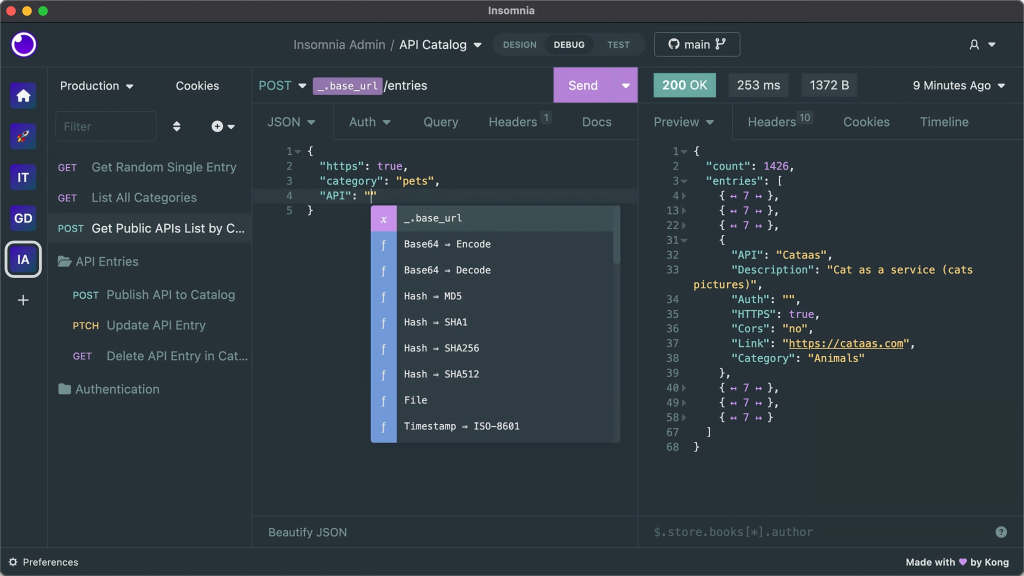
Insomnia is an API development tool built by Kong, the company behind the popular open-source API gateway. It positions itself as a simpler, more focused alternative to Postman. While Postman has expanded into a full platform, Insomnia stays closer to its roots as an API client that handles requests, environments, and design specs without the extra weight.
The tool supports REST, GraphQL, gRPC, and WebSocket protocols. It also includes API design capabilities through OpenAPI spec support, letting you design APIs before implementing them. The open-source core (available on GitHub) means you can self-host and customize it if needed.
Key Features
Multi-Protocol Request Builder
Insomnia handles REST, GraphQL, gRPC, and WebSocket requests in a clean, tabbed interface. The GraphQL support is particularly strong, with automatic schema introspection, query auto-complete, and a built-in documentation explorer. For GraphQL-heavy teams, this is a genuine advantage over most competitors.
Environment Variables and Chaining
Define variables per environment (development, staging, production) and reference them with Nunjucks template syntax. You can chain responses from one request into another, which is essential for testing authentication flows and multi-step API interactions.
API Design with OpenAPI
Insomnia includes a spec editor for OpenAPI documents. You can write or import OpenAPI specs, validate them, and generate requests directly from the spec. This design-first workflow helps teams agree on API contracts before writing code.
Plugin System
Insomnia supports plugins written in JavaScript. The plugin ecosystem is smaller than Postman’s but covers common needs like custom authentication, response formatting, and integration with external services. You can write your own plugins if something is missing.
Git Sync
Sync your Insomnia projects with Git repositories. This is a big deal for teams that want version control over their API collections without relying on a proprietary cloud. Changes are stored as YAML files that diff cleanly.
Pricing
Insomnia keeps pricing simple and affordable compared to the competition.
Scratch Pad – Free
Local-only mode with no account required. Full access to the request builder, environments, and plugins. No cloud sync or collaboration.
Individual Plan – $5/month
Adds cloud sync, unlimited projects, and end-to-end encryption for stored data. Meant for solo developers who want backup and cross-device access.
Team Plan – $12/user/month
Includes team workspaces, collaboration features, and centralized billing. Designed for small teams working together on API projects.
Pros and Cons
Pros
- Clean, focused interface without the bloat of larger platforms
- Excellent GraphQL support with schema introspection and auto-complete
- Open-source core with active community contributions
- Git sync for version-controlled API collections
- Affordable pricing, especially compared to Postman
Cons
- Smaller plugin ecosystem than Postman
- No built-in mock servers or monitoring
- Documentation generation is basic compared to alternatives
- Kong’s ownership raises questions about long-term open-source commitment
- Team collaboration features lag behind Postman significantly
| Plan | Price | Plan Features | Best For |
|---|---|---|---|
| Scratch Pad | $0 | Local-only, full request builder, environments, plugins, no cloud sync | Solo developers who want offline API testing |
| Individual | $5/mo | Cloud sync, unlimited projects, E2E encryption | Developers wanting cross-device sync and backup |
| Team | $12/user/mo | Team workspaces, collaboration features, centralized billing | Small teams collaborating on API projects |
Who Should Use Insomnia?
Insomnia is a strong pick for individual developers and small teams who find Postman too heavy. If you work primarily with REST and GraphQL APIs and value a clean, fast interface, Insomnia delivers. The Git sync feature makes it particularly appealing for teams that prefer storing everything in version control rather than a proprietary cloud.
It is less suitable for large teams that need extensive collaboration features, built-in mocking, or monitoring. If you need the full API lifecycle managed in one tool, Postman or a dedicated API management platform will serve you better.
Alternatives
Postman
Postman is the dominant API platform with testing, mocking, monitoring, and documentation all built in. Better for teams that need comprehensive API lifecycle management, though heavier and more expensive.
Hoppscotch
Hoppscotch is a free, browser-based API client that covers REST, GraphQL, and WebSocket. It requires no installation and is fully open source. Ideal for developers who want maximum simplicity.
HTTPie
HTTPie offers both a CLI and a desktop app for API testing with a focus on developer experience. The CLI version is beloved by terminal enthusiasts, and the desktop app provides a visual interface when needed.
FAQ
Is Insomnia open source?
Yes. Insomnia’s core is open source under the Apache 2.0 license. The source code is available on GitHub. Cloud features and team collaboration require a paid subscription.
How does Insomnia compare to Postman?
Insomnia is lighter, faster, and less expensive. It focuses on the core API client experience without extras like monitoring or advanced documentation. Postman offers more features but at the cost of complexity and price.
Can I use Insomnia without an account?
Yes. The Scratch Pad mode works entirely offline with no account required. You get the full request builder, environments, and plugins without signing up.
Verdict
Insomnia earns a 7.1/10 as a solid, lightweight API client that does the core job well. The GraphQL support and Git sync are genuine differentiators, and the pricing is fair. It loses points for missing features like mock servers and monitoring, and the collaboration tooling does not match Postman’s depth. For solo developers and small teams that want simplicity, it is a worthwhile choice.
Insomnia Pros & Cons
What We Like
- Clean, focused interface without platform bloat
- Excellent GraphQL support with schema introspection and auto-complete
- Open-source core with active community contributions
- Git sync for version-controlled API collections
- Affordable pricing compared to Postman
What Could Be Better
- Smaller plugin ecosystem than Postman
- No built-in mock servers or monitoring
- Documentation generation is basic compared to alternatives
- Kong ownership raises long-term open-source questions
- Team collaboration features lag behind Postman significantly
Insomnia FAQ
Is Insomnia open source?
Yes. Insomnia core is open source under Apache 2.0. Cloud features and team collaboration require a paid subscription.
How does Insomnia compare to Postman?
Insomnia is lighter, faster, and less expensive. It focuses on the core API client experience without monitoring or advanced docs.
Can I use Insomnia without an account?
Yes. Scratch Pad mode works entirely offline with no account required.
What is Insomnia?
Lightweight, open-source API client by Kong supporting REST, GraphQL, gRPC, and WebSocket. Clean interface with Git sync and plugin support for individual developers and small teams.
How much does Insomnia cost?
Insomnia pricing starts at $5/mo. A free plan is available.
Is Insomnia worth it?
Insomnia is a focused, lightweight API client with standout GraphQL support and Git-based sync. It lacks mock servers and monitoring but nails the core request-building experience at an affordable price point. We rate it 7.1/10.