Agendor Review (2026): Pricing, Features & Honest Verdict
TLDR
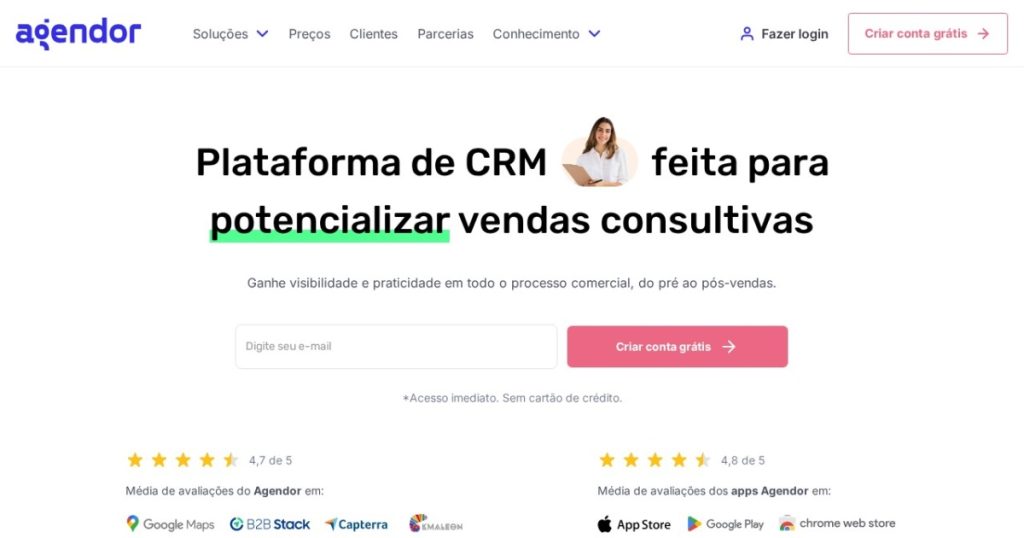
Agendor is a Brazilian B2B sales CRM built for small consultative teams. It nails pipeline visibility, activity discipline, and WhatsApp communication without the bloat of enterprise tools. The downside is it is Portuguese-only. Best for: small Brazilian B2B sales teams. Price: Free plan: yes, Pro from R$59/user/mo. Rating: 7.8/10.
What is Agendor?
Agendor is a cloud-based CRM made for B2B sales teams that sell through relationships rather than one-click checkouts. It pulls together a visual sales pipeline, task and activity scheduling, reporting dashboards, and direct customer communication through WhatsApp, email, and a virtual phone system. Reps get mobile apps with GPS visit mapping and offline sync, which matters for teams doing field sales across a big country. The product calls itself an ecosystem that connects CRM, communication, automation, and AI, but in practice the heart of it is straightforward pipeline and activity management that a small team can actually keep up with.
The company is a Brazilian SaaS startup that has been building this for over 13 years, and it now reports more than 10,000 companies and 21,000+ daily active users across industries like distribution, software, insurance, manufacturing, and logistics. That maturity shows. This is not a half-finished side project. It is a focused product that knows exactly who it serves: Portuguese-speaking sales teams that want structure without the overhead of a Salesforce rollout. We dug into the product and the recurring theme is restraint. Agendor does not try to be a marketing suite or a help desk. It tries to make sure no deal falls through the cracks, and that focus is its biggest strength.
What Are Agendor’s Key Features?
Visual sales pipelines
The core of Agendor is its drag-and-drop pipeline. You can build multiple customizable funnels for different products or sales motions, move deals between stages by dragging cards, and see the whole board at a glance. The free plan limits you to one funnel and 1,500 deals, while paid plans unlock unlimited funnels and deals. We found the layout clean enough that a new rep can be productive the same day, which is not something you can say about every CRM. Each deal card carries the company, contact, value, stage, and next action, so a manager can scan a board and immediately spot where money is stuck. For consultative B2B sales, where a single deal might involve five conversations over two months, that visibility is the whole point.
Activity and task management
Agendor pushes a discipline that small teams often lack: every deal gets next-step activities with reminders and a calendar view. Managers can see who has follow-ups overdue and where deals are stalling. The Performance plan layers task automation on top so routine follow-ups fire without manual setup. In daily use this is the feature that quietly pays for the tool, because the most common reason small teams lose deals is not a bad product, it is forgetting to follow up. Reminders, an activity calendar, and overdue alerts turn a forgetful sales process into a repeatable one.
WhatsApp and field-sales tools
This is where Agendor fits Latin American reality better than imported CRMs. It integrates WhatsApp directly, supports email automation with templates (the Pro plan caps email templates at 3, higher plans lift that), and includes a virtual phone system on higher tiers. For outside reps, GPS-enabled visit mapping and offline synchronization mean the app keeps working in a warehouse or a rural client visit with no signal, then syncs once the connection returns. A global CRM that assumes everyone lives in email and Slack simply does not match how Brazilian B2B sales runs, and Agendor’s WhatsApp-first stance is a real differentiator here.
Reporting and AI suggestions
Real-time dashboards and customizable reports give managers forecasting and team-performance views. The Performance tier adds AI suggestions and deal qualification scoring, plus a proposal generator with up to 200 templates. These are not as deep as enterprise analytics suites, but for a small team they cover the questions that actually matter: which deals are at risk, who is hitting their numbers, and what the pipeline is likely to close this month. The reporting is one of the most praised parts of the product in user reviews, with people specifically calling out the completeness of the sales reports and the configurable alerts.
How Much Does Agendor Cost?
Agendor starts at free, and the free plan is genuinely usable: up to 3 users, one funnel, 10,000 contacts, and 1,500 deals with no credit card. Paid plans are billed per user per month, in Brazilian Real. Pro is R$59, Performance is R$83, and Corporativo is R$156 with a 10-user minimum. Annual billing knocks 10 percent off.
Converted roughly, Pro lands near $11 to $12 per user, which undercuts global pipeline CRMs. Pipedrive starts around $14 per user per month and HubSpot’s paid Sales Hub climbs fast once you leave its free tier. RD Station CRM, the other big Brazilian option, is priced in a similar range to Agendor. So on raw cost, Agendor is competitive to cheap.
The honest caveat: the pricing is in R$ and the whole product is built for the Brazilian market, so for a team outside Brazil the currency and language matter more than the sticker price. One more thing worth knowing before you upgrade. The Corporativo tier requires a minimum of 10 users, so it is priced for established sales orgs, not a three-person shop. Most small teams will live happily on Free or Pro, and the jump to Performance only makes sense once you genuinely want automation, calling, and the proposal generator. There are no long-term contracts, so you can move up and down tiers as the team grows.
| Plan | Price | Plan Features | Best For |
|---|---|---|---|
| Gratuito | R$0 | Up to 3 users, 1 funnel, 10,000 contacts, 1,500 deals, 2 GB storage | Solo founders and tiny teams testing a CRM |
| Pro | R$59/user/mo | Unlimited users and data, custom funnels, email templates, sales dashboards, basic automation | Growing small teams that outgrew the free plan |
| Performance | R$83/user/mo | Adds task automation, deal qualification, proposal generator, virtual phone, AI suggestions | Active sales teams wanting automation and calling |
| Corporativo | R$156/user/mo | Min 10 users, IP access controls, custom contracts, dedicated account manager | Larger sales orgs needing governance and support |
Who is Agendor Best For?
Use Agendor if you run a small or mid-sized B2B sales team in Brazil, sell consultatively, and want a CRM that enforces follow-up discipline without a heavy rollout. It is a strong pick for distributors, agencies, software vendors, and field-sales operations that live in WhatsApp.
Skip Agendor if your team needs an English-language interface, deep native integrations with a wide app stack, or enterprise-grade customization. The Portuguese-only product is a hard wall for international teams, and integration depth beyond Google and WhatsApp leans on third-party connectors. It is also not the tool for a team that wants marketing automation and sales in one platform, since Agendor deliberately stays in the sales lane. The flip side of its focus is that you give up breadth, and some growing companies will eventually want more than a pure CRM offers.
- Great fit: Brazilian SMB sales teams, field reps, consultative B2B selling
- Poor fit: non-Portuguese teams, companies needing a sprawling native integration ecosystem
Best Agendor Alternatives
Pipedrive
Pipedrive is the global benchmark for visual-pipeline CRMs and the closest match in philosophy. It starts around $14 per user per month, has a polished English interface, and a much larger native integration marketplace. If you are outside Brazil or need broad integrations, Pipedrive is the safer choice. Agendor wins on local fit and the free plan.
RD Station CRM
RD Station CRM is the other major Brazilian player and Agendor’s most direct rival. It is also Portuguese-first and priced similarly, but its edge is tight integration with RD Station Marketing, so if you already run that marketing suite the combined funnel is hard to beat. Agendor is leaner and more sales-focused if you do not need the marketing automation.
HubSpot CRM
HubSpot offers a free CRM core with a broad platform spanning marketing, sales, and service. It is fully available in English and integrates with thousands of apps. The catch is cost: paid Sales Hub tiers scale up quickly and can dwarf Agendor’s pricing. Choose HubSpot if you want an all-in-one platform and have the budget; choose Agendor for a focused, cheaper sales tool.
Final Verdict: Is Agendor Worth It?
Agendor earns a 7.8. It does one job well: giving small B2B sales teams a clean, affordable, locally tuned CRM with strong pipeline and activity tracking plus the WhatsApp and field tools that Brazilian sales actually runs on. The free plan is real, the Pro price is cheap, and 13 years of development show in how stable and focused the product feels.
The reasons it is not rated higher are specific and fair: the Portuguese-only interface caps its audience, data imports from spreadsheets can be fiddly and sometimes need a few attempts to land cleanly, and integration depth outside Google and WhatsApp relies on third-party connectors rather than deep native hooks. None of these are dealbreakers for the audience it targets, but they are real. If you are a Brazilian SMB sales team that values follow-up discipline and a clean pipeline over a sprawling feature list, Agendor is an easy recommendation and the free plan means you can prove it works before paying a cent. If you need English, enterprise customization, or a vast integration ecosystem, look at Pipedrive or HubSpot instead. For its target market, this is one of the better-value CRMs we have looked at.
Agendor Pros & Cons
What We Like
- Generous free plan with 3 users and real contact and deal limits, not a crippled trial
- Clean, drag-and-drop pipeline interface that small teams pick up fast
- Native WhatsApp integration and field-sales tools (GPS visit mapping, offline sync) that fit Latin American workflows
- Pro plan at R$59/user is cheap versus global CRMs
What Could Be Better
- Portuguese-only interface and support, which rules it out for most teams outside Brazil
- Spreadsheet data imports can throw errors and need several attempts to land cleanly
- Integrations beyond Google and WhatsApp lean on third-party connectors rather than deep native ones
Agendor FAQ
What is Agendor?
Agendor is a cloud B2B sales CRM from Brazil aimed at small consultative sales teams. It centers on visual pipelines, activity scheduling, reporting, and WhatsApp communication, with mobile apps for field reps.
How much does Agendor cost?
Agendor has a free plan for up to 3 users. Paid tiers are Pro at R$59 per user per month, Performance at R$83 per user per month, and Corporativo at R$156 per user per month (minimum 10 users). Annual billing saves 10 percent.
Is Agendor worth it?
Yes for small Brazilian B2B teams. It is cheap, easy to use, and the free plan is usable for real work. It is not worth it if you need an English interface or deep native integrations.
What are the best Agendor alternatives?
Pipedrive (visual pipeline leader, from about $14/user/mo), RD Station CRM (Brazilian, tightly tied to RD marketing), and HubSpot CRM (free core with a broader but pricier platform).
Does Agendor offer a free plan?
Yes. The Gratuito plan supports up to 3 users, one sales funnel, 10,000 contacts, and 1,500 deals with no credit card required. There is also a 7-day Pro trial.
Who is Agendor best for?
Small and mid-sized B2B sales teams in Brazil that run consultative, relationship-led selling and want an affordable CRM with strong pipeline and activity tracking plus WhatsApp.






