Estuary Review (2026): Pricing, Features & Honest Verdict
TLDR
Estuary is a real-time data integration platform that combines change data capture, streaming, and batch ETL in one managed pipeline with 200+ connectors. It does what usually takes three separate tools, and undercuts Fivetran on high-volume jobs. Best for: data teams needing sub-second CDC. Price: Free up to 10GB/mo, Cloud usage-based. Rating: 7.9/10.
What is Estuary?
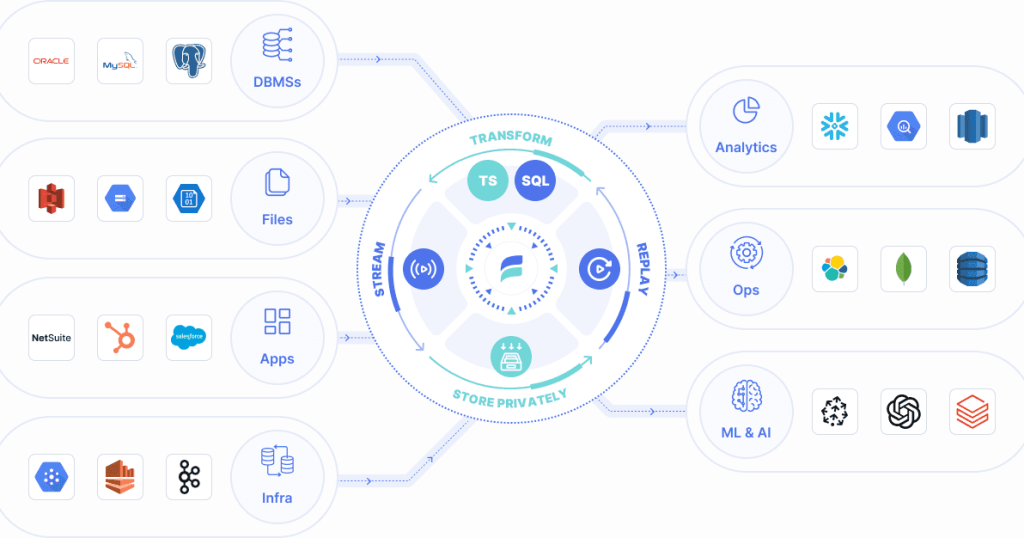
Estuary is a managed data integration platform built around a single idea: most teams should not need separate tools for streaming, change data capture, and batch ETL. Estuary handles all three in one pipeline. You connect a source like Postgres or Salesforce, pick a destination like Snowflake or BigQuery, and Estuary keeps the data flowing in real time using log-based CDC with exactly-once semantics. We dug into the architecture and found it sits on a Kafka-style backbone that delivers sub-100ms latency, which is a different category from the scheduled batch syncs most teams are used to.
The company, formerly known as Estuary Flow, has rebuilt itself around this real-time positioning. It reports moving 3 petabytes a month for 5,500+ users at 99.9% uptime. The pitch matters now because data warehouse bills and the demand for fresh data have both climbed: teams want operational analytics and AI pipelines that update in seconds, not hours, without the runaway costs that come from heavy batch tools.
What Are Estuary’s Key Features?
Unified streaming, CDC, and batch
This is the core differentiator. A single Estuary pipeline can capture changes from a database via log-based CDC, stream events in real time, and run scheduled batch loads, all from the same control plane. Most competitors pick one lane. Fivetran is fundamentally a scheduled batch loader, and Airbyte leans batch ELT. Estuary lets you mix approaches per source without bolting on a second platform. The practical payoff is that you maintain one pipeline definition and one billing relationship instead of gluing a streaming tool to a batch tool and praying the two stay in sync. For a small data team, that consolidation is worth a lot.
200+ connectors
Estuary ships 200+ connectors covering databases, data warehouses, SaaS apps, and cloud storage. That is a serious library, but be honest with yourself: Fivetran lists 500+. If your stack includes a long-tail or niche source, check the connector catalog before committing, because a missing connector is a hard blocker. The good news is that the connectors Estuary does support are deeply built rather than thin community wrappers, and the database CDC connectors in particular are the ones people praise most.
Sub-second latency with exactly-once delivery
Estuary advertises sub-100ms latency and exactly-once CDC semantics. For operational use cases like fraud detection, live dashboards, or feeding an AI model, that freshness is the whole point. We found this is the feature people cite when they switch from a batch tool that left them staring at hour-old data. Exactly-once delivery also matters more than it sounds: it means you do not get duplicate rows or dropped events when a pipeline restarts, which is the kind of bug that quietly corrupts a warehouse over months.
Flexible deployment and transformations
You can run Estuary fully managed (Public), network-isolated (Private), or inside your own cloud account (BYOC). The BYOC option matters for teams with data residency or compliance rules that forbid sending raw data through a vendor’s infrastructure. SOC 2 and HIPAA compliance, SSO, and custom SLAs live on the Enterprise tier. Estuary also includes built-in transformations and a dbt Cloud integration, so you can reshape data in flight rather than dumping raw tables and cleaning them up downstream. Real-time monitoring and SSH tunnel support round out the Cloud feature set.
How Much Does Estuary Cost?
Estuary starts free. The Developer tier gives you 10GB of data movement per month and 2 concurrent connectors with no credit card, which is enough to build and test a real pipeline. The paid Cloud plan is usage-based: $0.50 per GB plus $100 per connector for the first six, then $50 per additional connector, with a 30-day free trial. Enterprise pricing is custom with volume discounts on annual contracts.
The pricing story gets interesting against the competition. Fivetran charges on monthly active rows in a model that gets unpredictable and expensive as volume climbs, and customers regularly report bill shock. Estuary’s per-GB model is far more predictable, and the company points to documented 50 to 70 percent cost reductions for CDC workloads at companies like Glossier and Xometry. Airbyte’s open-source edition is free if you self-host, but you pay in engineering time to run it.
The catch in Estuary’s model is the per-connector fee. At $100 each for the first six connectors, a team with many small sources can see the bill add up quickly even at low data volumes. If you have ten sources each moving a trickle of data, the connector fees dominate. Map your connector count before you assume Estuary is cheaper. Estuary does offer a 50 percent discount on connectors past the sixth, which softens the blow for connector-heavy setups, but the math still favors teams that move a lot of data through a smaller number of connectors. That is the profile where the per-GB savings against Fivetran are largest.
One more pricing note worth flagging: the free Developer tier is permanent, not a time-limited trial, which is unusual in this category. Many competitors give you a 14-day window and then force a sales call. Being able to keep a small production pipeline running for free indefinitely lowers the risk of trying Estuary, and it means a solo engineer can validate the platform before pitching it internally.
| Plan | Price | Plan Features | Best For |
|---|---|---|---|
| Developer | Free | 10GB/mo, 2 concurrent connectors, no credit card | Solo engineers and side projects |
| Cloud | $0.50/GB + $100/connector | 200+ connectors, unlimited users, 30-day trial, dbt Cloud integration | Teams running production pipelines |
| Enterprise | Custom pricing | Volume discounts, SOC 2/HIPAA, SSO, private/BYOC deployment, custom SLA | Regulated and high-volume orgs |
Who is Estuary Best For?
Use Estuary if you run change data capture or streaming pipelines and want real-time freshness without Fivetran’s volume-based bills. It fits data engineering teams at SaaS and ecommerce companies feeding warehouses, operational dashboards, or AI workflows that need seconds-fresh data. The free tier makes it easy to prototype, and BYOC deployment covers compliance-sensitive teams. It is also a sensible pick for an analytics agency managing pipelines for several clients, since the usage-based model scales down to small jobs as cleanly as it scales up to petabyte volumes.
Skip Estuary if you only run a handful of slow scheduled batch syncs and freshness does not matter, because a simpler tool will do. Also reconsider if you depend on an obscure source connector that Estuary’s 200+ library does not cover, or if you have many low-volume connectors where the per-connector fee outweighs the per-GB savings. And if your team has no one comfortable thinking about pipelines and latency, the learning curve is steeper than a fully point-and-click batch loader.
Best Estuary Alternatives
Fivetran
Fivetran is the managed ELT category leader with 500+ connectors and a reputation for reliability and zero-maintenance setup. It is primarily a scheduled batch tool, so it cannot match Estuary’s sub-second latency, and its monthly-active-rows pricing is the main reason teams go looking for alternatives. Pricing is usage-based and quote-driven, often landing well above Estuary on high-volume CDC. Choose Fivetran if connector breadth matters more than real-time speed or cost.
Airbyte
Airbyte is the open-source option. The self-hosted Community edition is free and endlessly customizable, with a large catalog of community-built connectors. The tradeoff is that you run and maintain it yourself, and it leans batch ELT rather than true streaming. Airbyte Cloud is usage-based for those who want it managed. Pick Airbyte if you have engineering capacity and want to avoid per-connector vendor fees entirely.
Confluent
Confluent is the enterprise-grade managed Kafka platform for serious real-time event streaming. It is more powerful and more complex than Estuary, aimed at teams building event-driven architectures rather than warehouse loading. Confluent Cloud is usage-based and can get expensive at scale. Choose Confluent if streaming events between many systems is your core need rather than CDC into a warehouse.
Final Verdict: Is Estuary Worth It?
Estuary earns a 7.9 because it does something genuinely useful that few competitors match: real streaming, CDC, and batch ETL in one pipeline with sub-second latency and pricing that undercuts Fivetran on high-volume work. The documented cost reductions are real, the free tier is generous enough to actually test, and BYOC deployment opens the door for compliance-bound teams. This is a strong, modern data integration platform.
It is not a clean win for everyone. The 200+ connector library trails Fivetran’s, so source coverage can be a dealbreaker, and the $100-per-connector fee can erase the per-GB savings for teams with many small sources. If you need real-time data and your sources are covered, Estuary is one of the best-value options on the market right now. Verify your connectors and connector count first, then it is an easy recommendation.
Estuary Pros & Cons
What We Like
- One platform handles streaming, CDC, and batch ETL instead of stitching three tools together
- Sub-100ms latency with exactly-once CDC semantics, far faster than scheduled batch tools
- Usage-based pricing is dramatically cheaper than Fivetran on high-volume workloads
- Genuine free tier (10GB/mo, 2 connectors) with no credit card required
What Could Be Better
- 200+ connectors is a real library but trails Fivetran's 500+, so niche sources may be missing
- Per-connector pricing ($100 each for the first six) adds up fast for teams with many sources
- Real-time architecture is more concept to learn than a point-and-click batch loader
Estuary FAQ
What is Estuary?
Estuary is a real-time data integration platform that moves data between systems using change data capture, streaming, and batch ETL in a single managed pipeline. It supports 200+ connectors across databases, warehouses, and apps.
How much does Estuary cost?
The Developer tier is free for up to 10GB a month and 2 concurrent connectors. The Cloud plan is usage-based at $0.50 per GB plus $100 per connector (first six, then $50 each), with a 30-day trial. Enterprise is custom-priced.
Is Estuary worth it?
For teams that need real-time CDC or streaming and are tired of Fivetran's unpredictable bills, yes. Estuary often cuts CDC costs 50 to 70 percent. If you only run a few scheduled batch syncs, a simpler tool may be enough.
What are the best Estuary alternatives?
Fivetran is the managed batch leader with 500+ connectors but higher cost, Airbyte is open-source and self-hostable for free, and Confluent is the heavy-duty Kafka streaming option for real-time event pipelines.
Does Estuary offer a free plan?
Yes. The Developer tier is permanently free with 10GB of data movement per month and 2 concurrent connectors, no credit card required.
Who is Estuary best for?
Estuary is best for data engineering teams that need low-latency CDC or streaming pipelines and want predictable, usage-based pricing instead of Fivetran's volume-based bills.