Golf Review (2026): Pricing, Features & Honest Verdict
What is Golf?
TLDR
We found Golf while researching the growing problem of AI agent security. It’s a two-part product: an open-source Python framework for building MCP (Model Context Protocol) servers, and an enterprise control plane that provides security, governance, and visibility for AI agents connecting to organizational data. Think of it as a firewall purpose-built for the AI agent layer.
Golf was built by Wojciech Blaszak and Antoni Gmitruk, high school friends who started their first company at age 14. Both dropped out of university after one semester. They’re backed by Y Combinator (X25 batch), hold SOC 2 Type II certification, and have support from ElevenLabs. The product addresses a real blind spot: when employees use tools like Claude, Copilot, or Cursor to connect to company data through MCP, security teams have zero visibility into what’s happening.
What Are Golf’s Key Features?
MCP Server Framework (Open Source)
The free, open-source core. Install via pip install golf-mcp and define your MCP server’s tools, prompts, and resources as simple Python files in a directory structure. Golf auto-discovers everything and compiles it into a runnable server. It handles authentication (JWT, OAuth 2.0, API keys), observability via OpenTelemetry, and supports SSE, Streamable HTTP, and STDIO transports. 812 GitHub stars and growing.
Golf Firewall
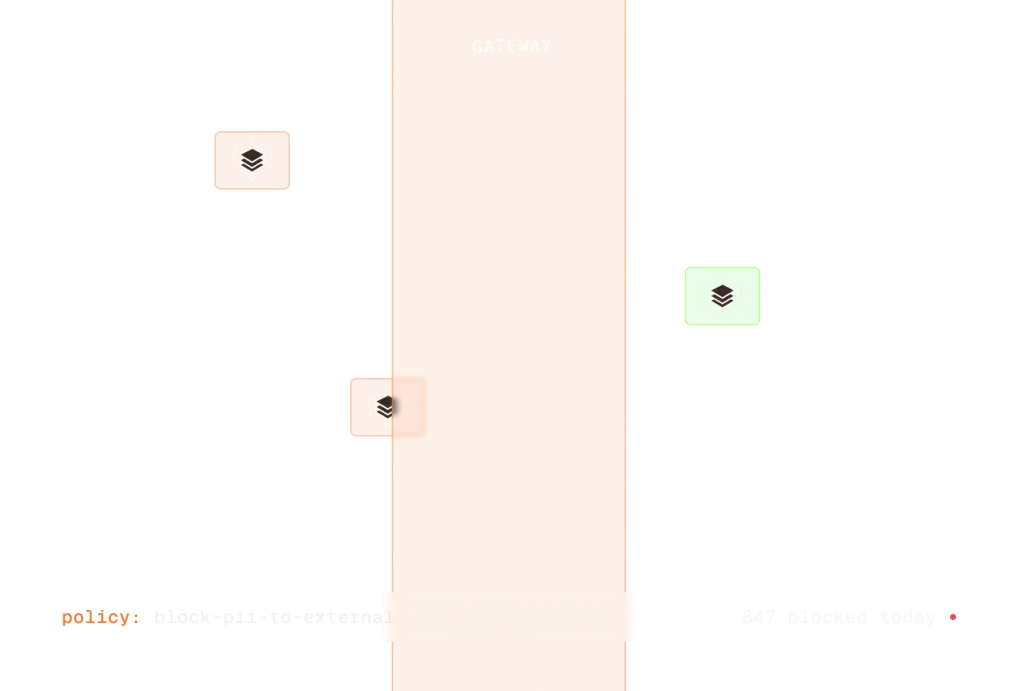
The commercial product sits between AI agents and your MCP servers. It operates in two modes: Monitor (log and score threats without blocking) and Enforce (actively block or modify traffic). It uses a fine-tuned LLM to detect prompt injections in real time, rather than relying on brittle rule-based detection. It also catches PII leaks, credential exposure, token abuse, command injection, and tool spoofing. Sub-millisecond latency with instant rollback.
Discovery and Inventory
Golf Scanner runs 20 security checks per MCP server to find vulnerabilities. Golf Inventory provides fleet-wide visibility with 36 security checks, discovering every MCP server in your environment, including the ones nobody officially deployed. This “shadow AI” detection is critical for enterprises where employees are connecting AI tools to company systems without IT knowing.
Compliance and Audit
Ninety-day audit trails covering prompts, actions, and data access. Pre-mapped to SOC 2, ISO 27001, NIST AI RMF, and FINRA compliance frameworks. Quick evidence export for audits. Integrates with SIEM tools like Splunk, Datadog, and Elasticsearch. For companies in regulated industries, this alone could justify the product.
How Much Does Golf Cost?
The open-source MCP framework is free under the Apache 2.0 license. You can build production-ready MCP servers without paying a cent. The enterprise products (Firewall, Scanner, Inventory, Control Plane) have custom pricing through a sales process. No public pricing is available, which is standard for enterprise security products but frustrating for smaller teams who want to evaluate costs upfront.
For context, competitors in the MCP gateway space vary widely. Docker MCP Gateway is open-source and free. Composio uses usage-based pricing. Lasso Security and MintMCP also use enterprise sales models. Golf’s open-source framework competes well against FastMCP (the most popular Python MCP framework) as a free alternative, while the enterprise suite competes against a fragmented market of emerging MCP security tools.
| Plan | Price | Plan Features | Best For |
|---|---|---|---|
| Open Source | Free | Full MCP framework, Apache 2.0 license | Developers building MCP servers |
| Enterprise | Custom | Firewall, Scanner, Inventory, Control Plane, SIEM integration | Security teams at companies with AI agent deployments |
Who is Golf Best For?
Use Golf if you’re a developer building MCP servers in Python and want a clean, opinionated framework with built-in auth and observability. The open-source framework is genuinely useful, even if you never touch the enterprise product. Also consider it if you’re a security or platform team at a company where employees are already using AI coding assistants and you need visibility into what those tools are accessing.
Skip Golf if you’re building MCP servers in TypeScript or Node.js. It’s Python-only. Also skip it if you’re a small startup. The enterprise products require a sales conversation, and the team is only two people, which raises fair questions about support capacity. If you need an established, proven security platform, look at Lasso Security (a 2024 Gartner Cool Vendor) or wait for the larger players (Cloudflare, Microsoft) to mature their MCP security offerings.
Best Golf Alternatives
Lasso Security
A security-first MCP gateway with plugin-based architecture and triple-gate security across AI, MCP, and API layers. Named a 2024 Gartner Cool Vendor for AI Security. Open-source proxy available. Adds 100-250ms latency overhead compared to Golf’s sub-millisecond claims.
FastMCP
The most popular Python MCP framework. Larger community than Golf and more established. If you only need the framework (not the enterprise security layer), FastMCP is the safer bet. Free and open-source.
Cloudflare MCP Server Portals
A zero-trust approach from a company with massive infrastructure. Single unified portal endpoint. Best for teams already in the Cloudflare ecosystem. Still maturing but backed by serious resources.
Final Verdict: Is Golf Worth It?
Golf is attacking a problem that barely existed a year ago but is now urgent. As AI agents become standard developer tools, the security gap they create is real. Nobody is auditing what Claude or Copilot accesses through MCP connections. Golf’s approach of combining a free framework (to get developers building on their platform) with an enterprise security layer (to capture revenue) is smart strategy.
The open-source framework works well. The enterprise product looks comprehensive on paper. But this is a two-person team competing against well-funded alternatives and incumbents like Cloudflare and Microsoft. The MCP security space is fragmented and moving fast. Golf has YC backing, SOC 2 certification, and a solid technical foundation. If you’re building MCP servers in Python, the framework is worth trying today. For the enterprise security suite, keep Golf on your shortlist but do your due diligence on the team’s capacity to support production deployments.
Golf Pros & Cons
What We Like
- Free open-source MCP framework with built-in auth and observability
- Purpose-built MCP security with fine-tuned LLM threat detection
- YC-backed with SOC 2 Type II certification
- Pre-mapped compliance for SOC 2, ISO 27001, NIST AI RMF, and FINRA
- Monitor-then-enforce deployment reduces rollout risk
What Could Be Better
- Python-only framework, no TypeScript or Node.js support
- Two-person team raises questions about enterprise support capacity
- No public pricing for enterprise products
- Still early stage with a smaller community than FastMCP
Golf FAQ
What is Golf?
Golf is a two-part product: an open-source Python framework for building MCP servers, and an enterprise control plane that provides security, governance, and visibility for AI agents connecting to organizational data.
How much does Golf cost?
The open-source MCP framework is free under the Apache 2.0 license. Enterprise products (Firewall, Scanner, Inventory, Control Plane) have custom pricing through a sales process.
Is Golf worth it?
The open-source framework is genuinely useful for Python developers building MCP servers. The enterprise security suite looks comprehensive but comes from a very small team. Worth evaluating but do your due diligence.
What are the best Golf alternatives?
Key alternatives include FastMCP (most popular Python MCP framework), Lasso Security (Gartner Cool Vendor for AI Security), and Cloudflare MCP Server Portals (zero-trust approach with massive infrastructure backing).
Does Golf offer a free plan?
Yes. The entire MCP server framework is free and open-source under the Apache 2.0 license. You can build production-ready MCP servers without paying anything.
Who is Golf best for?
Python developers building MCP servers who want built-in authentication and observability, and security teams at enterprises who need visibility into AI agent connections to company data.






