Campsite Review (2026): Pricing, Features & Honest Verdict
TLDR
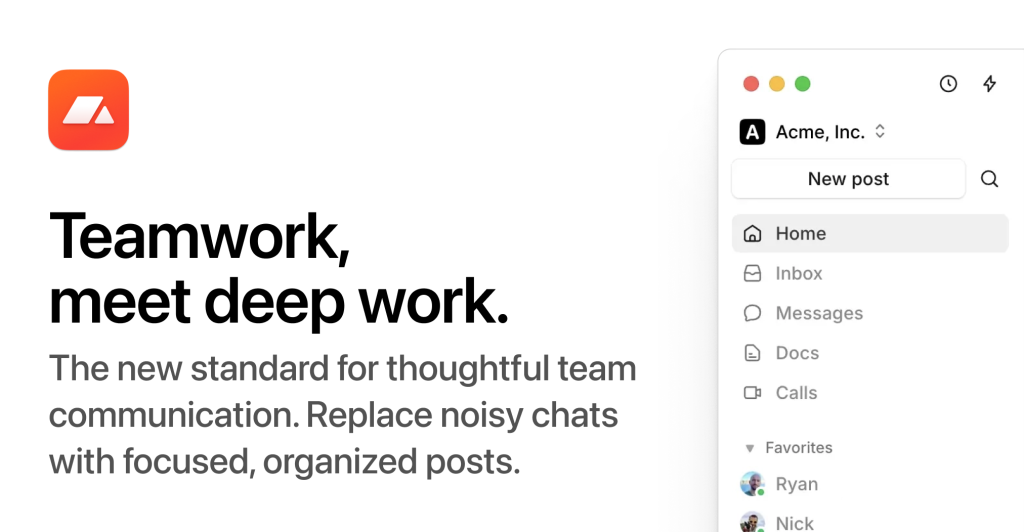
Campsite is an async-first team communication hub that bundles posts, chat, calls, and docs into one clean workspace. Best for: small-to-medium teams wanting structured updates over noisy Slack channels. Free for up to 10 members, then $12/user/mo. Rating: 7.6/10
What is Campsite?
Campsite is a team communication platform built by ex-GitHub designers who got tired of information getting lost in chat streams. Instead of defaulting to real-time messaging, Campsite puts async posts and threads at the center of team communication. Think of it as a middle ground between Slack’s instant messaging and Basecamp’s structured project boards.
The platform organizes conversations into channels, but the default unit isn’t a chat message. It’s a post. You write something substantial, people respond in threads, and the important stuff doesn’t scroll away into oblivion. Chat exists too, but it’s intentionally secondary.
Key Features
The core of Campsite revolves around structured posts. You create updates, proposals, or announcements in rich-text format with inline images, code blocks, and file attachments. Each post gets its own thread, keeping discussions contained and searchable.
Calls are built right in. You can jump on audio or video without leaving the app. There’s screen sharing and the calls integrate with the post system, so meeting notes and follow-ups stay connected to the original context.
AI summaries catch you up on channels you’ve missed. Instead of scrolling through 50 posts, you get a digest of what happened. It works surprisingly well for keeping remote teams aligned without the guilt of unread notifications.
Integrations with Linear, GitHub, Figma, and Slack mean Campsite can sit alongside your existing tools rather than replacing everything overnight. The Slack integration is particularly smart, letting you bridge conversations between both platforms during a transition period.
Docs live inside Campsite too. It’s not trying to replace Notion, but having lightweight documentation next to your discussions keeps context tight. You can reference docs in posts and vice versa.
Pricing Breakdown
Campsite’s free tier covers up to 10 team members with core features. That’s generous enough for small startups to genuinely evaluate the platform before committing.
The Pro plan at $12/user/month unlocks everything: unlimited members, advanced integrations, priority support, and the full AI feature set. There’s no confusing tier matrix with features scattered across four different plans. You’re either free or Pro.
Compared to Slack’s Pro at $8.75/user/month, Campsite costs more on paper. But when you factor in that Campsite replaces your meeting tool and basic docs setup, the math can work out in its favor.
| Plan | Price | Plan Features | Best For |
|---|---|---|---|
| Free | $0 | Up to 10 members, core features, basic AI | Small teams evaluating the platform |
| Pro | $12/user/mo | Unlimited members, full AI summaries, advanced integrations, priority support | Growing teams committed to async communication |
Who Is Campsite Best For?
Remote and hybrid teams between 5 and 50 people will get the most value. If your team has complained about “too many Slack messages” or important decisions getting buried in channels, Campsite directly addresses that pain.
Agencies juggling multiple client projects benefit from the structured post format. Each project channel becomes a clean timeline of decisions rather than a chaotic chat log.
SaaS teams doing async standups and weekly updates will find the post-first approach natural. The threading keeps status updates organized without needing a separate standup bot.
Pros and Cons
Pros
- Post-first design genuinely reduces communication noise compared to chat-centric tools
- AI summaries for catching up on missed discussions actually save time
- Built-in calls eliminate the need for a separate video tool for quick syncs
- Clean, well-designed interface (the GitHub design pedigree shows)
- Free tier for 10 members is practical enough for real team use
Cons
- $12/user/month is pricier than Slack Pro for teams that just need chat
- Smaller integration ecosystem compared to Slack or Microsoft Teams
- Docs feature is basic and won’t replace a dedicated tool like Notion
- Requires team buy-in to shift from chat-first habits, which can be a tough sell
Alternatives
Slack
The dominant team chat tool with the largest integration ecosystem. Better for teams that prefer real-time communication and need connections to hundreds of third-party apps. Worse at keeping long-form discussions organized.
Twist
Another async-first communication tool from the Todoist team. Similar philosophy to Campsite with thread-based conversations, but with a more established user base and slightly different approach to organizing topics.
Basecamp
The original structured team communication tool with project management built in. Flat pricing at $349/month for unlimited users makes it cheaper for larger teams. Less polished UI and no AI features.
Final Verdict
Campsite delivers on its promise of calmer, more organized team communication. The async-first approach isn’t just a marketing angle. It fundamentally changes how your team shares information. The design quality is excellent, the AI summaries are genuinely useful, and the pricing is straightforward. The main challenge is convincing your team to break their Slack habits. If you can get buy-in, Campsite is a meaningful upgrade for teams drowning in chat noise.
FAQ
Can Campsite fully replace Slack?
For many teams, yes. It covers chat, posts, calls, and basic docs. The main gap is Slack’s massive integration library. If you rely on niche Slack integrations, you’ll want to check Campsite’s integration list first.
Does Campsite work for large teams over 100 people?
It can, but Campsite currently targets small-to-medium teams. Enterprise features like SSO, compliance tools, and advanced admin controls are still developing compared to Slack or Teams.
Is the AI summary feature included in the free plan?
Basic AI features are available on free, but the full AI summary and catch-up tools require the Pro plan at $12/user/month.
Campsite Pros & Cons
What We Like
- Post-first design genuinely reduces communication noise
- AI summaries for catching up on missed discussions save real time
- Built-in calls eliminate needing a separate video tool
- Clean, polished interface with strong design quality
- Free tier for 10 members is practical for real use
What Could Be Better
- $12/user/month is pricier than Slack Pro for chat-only needs
- Smaller integration ecosystem than Slack or Teams
- Docs feature is too basic to replace Notion
- Requires team buy-in to shift from chat-first habits
Campsite FAQ
Can Campsite fully replace Slack?
For many teams, yes. It covers chat, posts, calls, and basic docs. The main gap is Slack's massive integration library, so check Campsite's integrations first.
Does Campsite work for large teams over 100 people?
It can, but Campsite targets small-to-medium teams. Enterprise features like SSO and compliance tools are still developing.
Is the AI summary feature included in the free plan?
Basic AI features are on free, but full AI summaries require the Pro plan at $12/user/month.
What is Campsite?
Async-first team communication hub with posts, calls, chat, and docs. Built by ex-GitHub designers for teams that want structured updates over noisy chat.
How much does Campsite cost?
Campsite pricing starts at $12/user/mo. A free plan is available.
Is Campsite worth it?
Campsite delivers calmer, more organized team communication with its async-first approach. Excellent design, useful AI summaries, and straightforward pricing. The main hurdle is getting your team to break their Slack habits. We rate it 7.6/10.






