Pusher Review (2026): Pricing, Features & Honest Verdict
TLDR
Pusher is a hosted WebSocket infrastructure service that handles real-time messaging so you do not have to run your own servers. Best for: developers building apps that need live updates, chat, or notifications. Price: Free (200K messages/day), $49/mo Startup, $99 Pro, $299 Business. Rating: 7.1/10
What is Pusher?
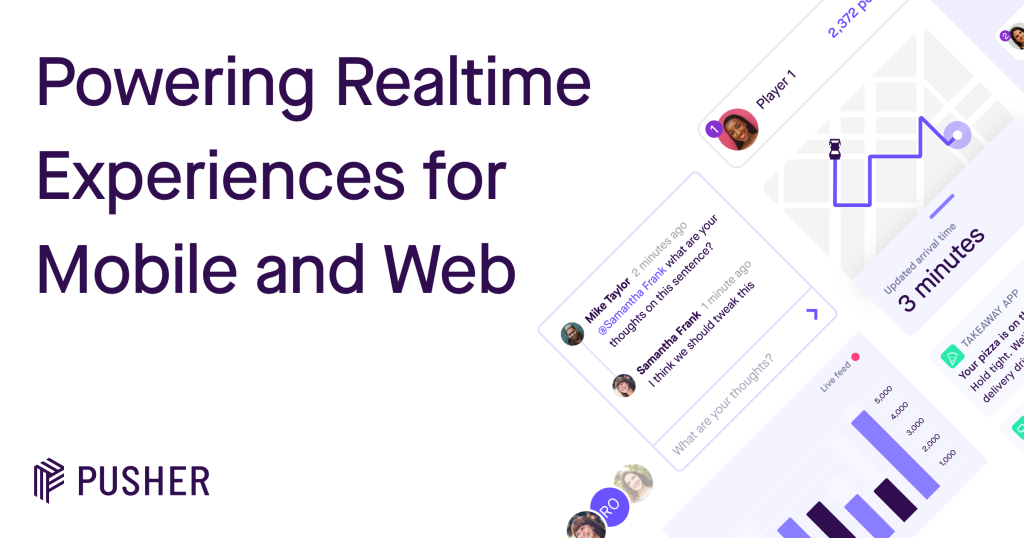
Pusher provides hosted real-time infrastructure for web and mobile applications. Instead of setting up and managing your own WebSocket servers, you integrate Pusher’s SDK, and it handles the connections, scaling, and message delivery. The core product is Channels, a pub/sub messaging system. They also offer Beams for push notifications.
Pusher has been around since 2010 and is one of the oldest players in the hosted real-time space. It powers live features in apps from Mailchimp to GitHub. The value proposition is straightforward: real-time is hard to scale, and Pusher takes that problem off your plate. You pay for the convenience of not managing infrastructure.
Key Features
Channels (Pub/Sub Messaging)
Channels is the core product. You create named channels, clients subscribe to them, and your server publishes events. It supports public channels, private channels (authenticated), presence channels (who is online), and encrypted channels. The pub/sub model is simple to understand and works for most real-time use cases: live dashboards, chat, notifications, collaborative editing triggers, and more.
Presence Channels
Presence channels let you track which users are currently subscribed. This is the foundation for “who is online” indicators, typing indicators in chat, and any feature where you need to know who is connected. Presence data is managed by Pusher, so you do not need to build your own tracking layer.
Client Events
Client events allow messages to flow directly between connected clients without hitting your server first. This is useful for features like typing indicators or cursor positions in collaborative apps. It reduces latency and server load for ephemeral interactions that do not need to be persisted.
Beams (Push Notifications)
Beams is Pusher’s push notification service for iOS and Android. It handles device token management, audience segmentation, and delivery across APNs and FCM. It is a separate product from Channels but integrates cleanly. For apps that need both real-time in-app messaging and mobile push notifications, having both under one provider simplifies the stack.
SDKs and Platform Support
Pusher provides official SDKs for JavaScript, iOS (Swift), Android (Kotlin/Java), Flutter, React Native, Python, Ruby, Go, PHP, .NET, and more. The JavaScript SDK is the most mature and widely used. Integration typically takes 15-30 minutes for basic functionality. The SDKs handle reconnection, fallback transports, and connection state management.
Debug Console
The dashboard includes a real-time debug console where you can see events flowing through your channels. This is genuinely useful during development. You can watch messages arrive, inspect payloads, and debug connection issues without adding logging to your code.
Pricing
The free plan includes 200,000 messages per day and 100 concurrent connections. That is enough for development and small production apps. The $49/mo Startup plan bumps connections to 500 and messages to 1 million/day. The $99/mo Pro plan offers 2,000 connections and 2 million messages/day. The $299/mo Business plan scales to 10,000 connections. Custom enterprise pricing is available above that.
Pros
- Fast integration with SDKs for every major platform
- Reliable infrastructure with years of production track record
- Presence channels and client events reduce server-side complexity
- Debug console makes development and troubleshooting easy
- Generous free tier for prototyping and small apps
Cons
- Pricing scales quickly once you exceed free tier limits
- Connection limits on lower plans can be restrictive for growing apps
- No built-in message persistence or history (messages are fire-and-forget)
- Vendor lock-in since the protocol is proprietary
| Plan | Price | Plan Features | Best For |
|---|---|---|---|
| Free | Free | 200K messages/day, 100 concurrent connections | Prototyping and small apps |
| Startup | $49/mo | 1M messages/day, 500 connections | Early-stage startups |
| Pro | $99/mo | 2M messages/day, 2,000 connections | Growing apps |
| Business | $299/mo | 10M messages/day, 10,000 connections, priority support | Production-scale applications |
Who is Pusher Best For?
Pusher is best for development teams building apps that need real-time features without the overhead of managing WebSocket infrastructure. If you are a startup shipping a product with live updates, chat, or notifications and you do not want to run your own messaging servers, Pusher gets you there fast. It is less ideal for high-volume applications where the per-message pricing becomes expensive at scale.
Alternatives
Ably
Ably is a direct competitor with a similar hosted pub/sub model but adds message persistence, history, and stronger delivery guarantees. Ably is generally more feature-rich than Pusher but also more expensive. If you need guaranteed message delivery or message history, Ably is the stronger choice.
Socket.io
Socket.io is an open-source library for real-time communication. It is free but you manage the servers yourself. If you have the infrastructure team and want full control (and zero per-message costs), Socket.io is the DIY alternative. The trade-off is operational complexity.
LiveKit
LiveKit is an open-source platform focused on real-time audio, video, and data. It goes beyond simple messaging into media streaming territory. If your real-time needs include video or voice, LiveKit covers a broader surface area than Pusher. For pure messaging, it is more than you need.
FAQ
Does Pusher store message history?
No. Pusher Channels is a fire-and-forget system. Messages are delivered to connected clients in real-time but are not stored. If you need message history, you need to persist messages in your own database or use a service like Ably that includes history.
What happens when I exceed my plan limits?
Pusher will notify you when you approach limits. If you exceed concurrent connection limits, new connections may be rejected. Message overages are handled depending on your plan. It is worth monitoring usage to avoid disruptions.
Can I use Pusher for chat?
Yes. Pusher Channels works well for chat applications. You create channels for conversations, use presence for online status, and client events for typing indicators. You will need to build the chat UI and message persistence yourself.
Is Pusher secure?
Yes. Private channels require server-side authentication. Encrypted channels add end-to-end encryption so Pusher cannot read message contents. All connections use TLS. The authentication model is well-documented and straightforward to implement.
Verdict
Pusher is a solid, proven choice for adding real-time features to web and mobile apps. The SDKs are excellent, integration is fast, and the infrastructure is reliable. The main drawback is pricing at scale: once your app grows beyond the lower tiers, costs climb quickly. For startups and small teams shipping real-time features, Pusher removes a genuine infrastructure headache. For high-volume applications, run the numbers carefully before committing.
Pusher Pros & Cons
What We Like
- Fast integration with SDKs for every major platform
- Reliable infrastructure with years of production track record
- Presence channels and client events reduce server-side complexity
- Debug console makes development and troubleshooting easy
- Generous free tier for prototyping and small apps
What Could Be Better
- Pricing scales quickly once you exceed free tier limits
- Connection limits on lower plans can be restrictive for growing apps
- No built-in message persistence or history
- Vendor lock-in since the protocol is proprietary
Pusher FAQ
Does Pusher store message history?
No. Pusher Channels is fire-and-forget. Messages are delivered in real-time but not stored. Persist messages in your own database if needed.
What happens when I exceed my plan limits?
You get notified as you approach limits. Exceeding connection limits may reject new connections. Monitor usage to avoid disruptions.
Can I use Pusher for chat?
Yes. Use channels for conversations, presence for online status, and client events for typing indicators. You build the UI and persistence yourself.
Is Pusher secure?
Yes. Private channels require authentication, encrypted channels add E2E encryption, and all connections use TLS.
What is Pusher?
Hosted WebSocket infrastructure for real-time messaging. Pub/sub channels, push notifications, and SDKs for every platform.
How much does Pusher cost?
Pusher pricing starts at $49/mo. A free plan is available.






