Remo Review (2026): Pricing, Features & Honest Verdict
TLDR
Remo is an interactive virtual and hybrid event platform where attendees hop between tables on a map-style floor to network face-to-face. Best for organizations running networking-heavy conferences and career fairs. Price: From $299/mo, no free plan (14-day trial). Rating: 7.3/10.
What is Remo?
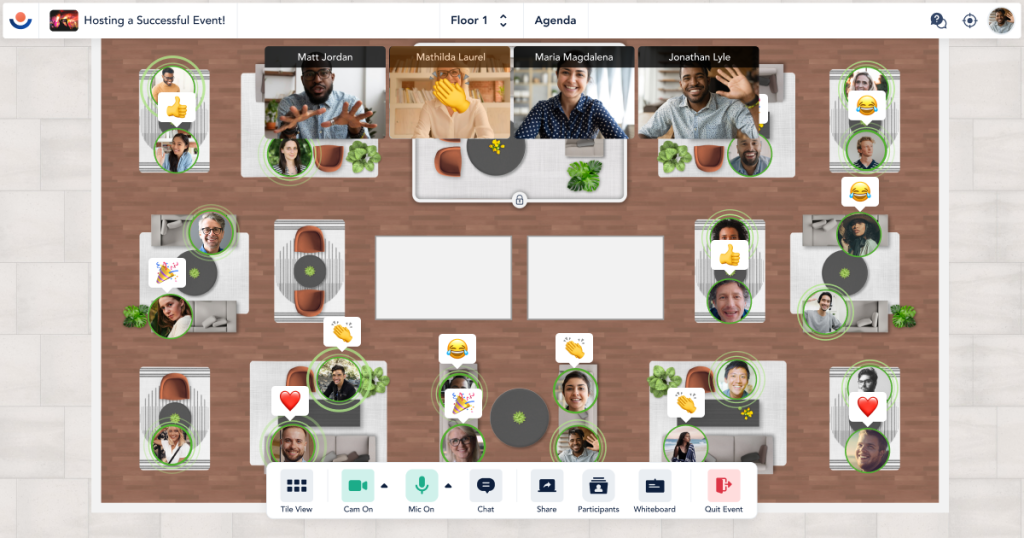
Remo is a virtual and hybrid event platform built around one core idea: real events are about conversations, not slides. Instead of dropping everyone into a single grid of video tiles, Remo gives you a map-style floor plan dotted with virtual tables. Attendees click into a table to start a face-to-face video chat, then get up and move to another table whenever they want, recreating the natural mingling of an in-person conference.
The platform has hosted more than 16,500 events for over 910,000 attendees, and it is used by enterprises including Amazon, Sony, Salesforce, Shopify, IBM, and universities like Harvard, MIT, and Princeton. That track record, plus G2 Leader status, makes Remo one of the more credible names in a category where many competitors have folded or pivoted.
What Are Remo’s Key Features?
Table-Based Networking Floors
The signature feature is the floor plan itself. Remo ships with 80+ pre-made layouts and supports fully custom 3D branded designs. Attendees move between tables freely, each table is a small-group video conversation, and the whole experience feels far closer to a real venue than a webinar grid.
Presentation and Broadcast Mode
When it is time for a keynote, hosts switch into presentation mode, which pulls everyone’s attention to the stage. You get polls, Q&A, hand-raising, audience reactions, closed captions, and RTMP livestreaming, so the same event can flip between mingling and broadcast in seconds.
AI Matchmaking
Remo’s matchmaking algorithm suggests which attendees should connect and even surfaces talking points, which cuts down on the awkward silences that kill virtual networking. For career fairs and large conferences, this is a genuinely useful way to spark relevant introductions.
Registration, Ticketing, and Analytics
The platform handles custom registration forms, multiple ticket types (free or paid), instant payouts, and revenue tracking, alongside an analytics dashboard for attendance, engagement, and lead capture. It is a full event stack rather than just a video room.
How Much Does Remo Cost?
Remo’s Starter plan begins at $299/month for 200+ attendees and 20+ organizer licenses, One-Time Events start at $699 for a single event with 100+ attendees, and Enterprise pricing is custom for 2,000+ attendee capacity with SSO and dedicated support. A 14-day free trial is available with no credit card, but there is no permanent free tier. That puts Remo at the premium end compared with Airmeet, which has cheaper entry tiers, while large-scale rivals like the former Hopin moved upmarket toward enterprise contracts. Every Remo plan unlocks all features, so you are paying for capacity rather than gated functionality.
| Plan | Price | Plan Features | Best For |
|---|---|---|---|
| Free Trial | Free for 14 days | Full feature access, no credit card required | Testing the platform before committing |
| Starter | From $299/mo | 200+ attendees, 20+ organizer licenses, 6+ content displays, unlimited events | Teams running recurring networking events and webinars |
| One-Time Events | From $699 | 100+ attendees, pay only for features you need, flexible room scaling | Single conferences, summits, or trade shows |
| Enterprise | Custom | 2,000+ attendees, SSO, custom branding, dedicated success rep, advanced security and analytics | Large organizations running high-capacity, always-on event spaces |
Who Is Remo Best For?
Use Remo if your events live or die on attendee networking: associations, alumni groups, universities running career fairs, and companies hosting recurring summits where people need to actually meet each other. The table-hopping model is the best in the category for that, and the all-features-included pricing rewards organizations that run events regularly.
Skip Remo if you mostly broadcast one-to-many webinars, run occasional small meetings, or have a tight budget. At $299/month minimum with no free plan, a basic webinar tool or even Zoom Webinars will cover one-way presentations for a fraction of the cost.
What Are the Best Remo Alternatives?
Airmeet
Airmeet offers social lounges and networking tables similar to Remo, with more affordable entry pricing and strong webinar features. It is a good fit for teams that want networking without Remo’s premium starting price.
Hopin
Hopin (now part of RingCentral) is built for large-scale, multi-track virtual conferences and expos. It scales further than Remo for big productions but has shifted toward enterprise contracts and lacks Remo’s intimate table-based networking feel.
Gather
Gather uses a retro game-style map where avatars walk around and trigger video chats by proximity. It is cheaper and more playful than Remo, making it great for casual team socials and community spaces, though less polished for professional conferences.
Final Verdict: Is Remo Worth It?
Remo does the hardest thing in virtual events well: it makes networking actually happen. The floor-plan layout, free table movement, and AI matchmaking add up to an experience that broadcast-first tools simply cannot match, and the enterprise client list and G2 Leader status back up its reliability at scale.
The catch is price and fit. With no free plan and a $299/month floor, Remo is overkill for casual hosts or pure webinar use, and its browser-heavy experience demands solid connections from every attendee. But if your events are built around people meeting people, Remo is one of the best tools available and worth the premium.
Remo Pros & Cons
What We Like
- Map-based floor plans with table-hopping recreate real networking better than any grid-of-faces webinar tool
- Every plan unlocks all features, so you pay for attendee capacity, not feature gating
- AI matchmaking suggests connections and talking points to attendees, reducing awkward dead air
- Proven at scale with enterprise clients like Amazon, Salesforce, and Harvard, plus G2 Leader status
What Could Be Better
- Starts at $299/month with no permanent free plan, pricing out small teams and casual hosts
- Browser-based experience can be resource-heavy and demands a stable connection from every attendee
Remo FAQ
What is Remo?
Remo is an interactive virtual and hybrid event platform. Instead of a static grid of video tiles, attendees sit at virtual tables on a map-style floor plan and move freely between them for face-to-face conversations, making it well suited to networking events, conferences, career fairs, and trade shows.
How much does Remo cost?
Remo's Starter plan begins at $299/month for 200+ attendees, One-Time Events start at $699, and Enterprise pricing is custom for 2,000+ attendee capacity. There is no permanent free plan, but a 14-day free trial is available with no credit card required.
Is Remo worth it?
For organizations that prioritize attendee networking and interaction, Remo is worth it because its table-hopping floor plans deliver connection that grid-based webinar tools cannot. If you only need one-way broadcast webinars, cheaper tools will do the job for far less money.
What are the best Remo alternatives?
The main alternatives are Hopin (now part of RingCentral) for large-scale conferences, Airmeet for webinars with social lounges, and Gather for casual game-style virtual spaces. Remo stands out for its polished, professional networking floor plans.
Does Remo offer a free plan?
No. Remo does not have a permanent free tier. It offers a 14-day free trial with full feature access and no credit card required, and paid plans start at $299/month.
Who is Remo best for?
Remo is best for businesses, associations, and educational institutions hosting networking-heavy virtual or hybrid events such as conferences, career fairs, and trade shows where attendee-to-attendee interaction matters more than one-way presentation.