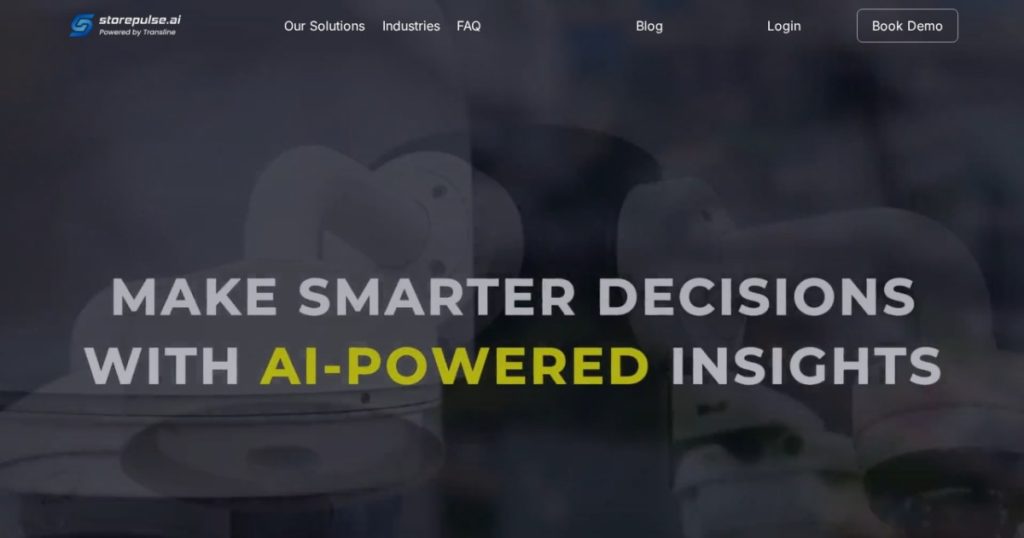
StorePulse Review (2026): Pricing, Features & Honest Verdict
TLDR
StorePulse is an AI video analytics platform that turns your existing CCTV cameras into a live source of retail and operational data: footfall, demographics, wait times, and compliance alerts, with no new hardware. Best for: retail chains, F&B, and manufacturing sites that already have cameras and want analytics without a hardware project. Price: custom, quote-based. Rating: 7.8/10.
What is StorePulse?
StorePulse is an AI-powered video intelligence platform. It connects to the CCTV cameras you already have and converts those feeds into structured business data in real time. Instead of security footage that only gets reviewed after something goes wrong, you get live counts of foot traffic, shopper demographics, queue and wait times, and alerts when something is off. The core promise is that you do not buy new hardware. StorePulse layers software and AI models on top of the camera network already bolted to your ceilings.
It is built by Transline Technologies Limited, based in New Delhi, India. The platform spans three broad jobs: footfall analytics with gender and age-group segmentation, compliance monitoring such as hairnet and PPE detection for food and factory environments, and operational insight like wait times, vehicle movement, and inventory tracking. The company lists 90-plus partners and names clients including SpiceJet and apparel brands like Cantabil and Columbia, and it holds a 4.3-star rating on TechJockey. We looked at where it fits, and the standout is the deployment model: because it reuses existing cameras, it sidesteps the biggest cost and delay in most computer-vision projects.
What Are StorePulse’s Key Features?
Footfall and Demographic Analytics
StorePulse counts how many people enter, tracks visitor-to-customer conversion, and segments visitors by estimated gender and age group. For a retailer this answers real questions: how many people walked past versus came in, when your peak hours actually are, and which store zones draw attention. The demographic estimates help tailor product placement and staffing. Treat the age and gender data as directional rather than exact, as with any camera-based estimation, but as a trend signal it is genuinely useful for merchandising decisions. Pairing conversion rate with footfall is the metric that matters most here: a store can be busy and still convert poorly, and StorePulse makes that gap visible so managers can act on it rather than guess.
Compliance Monitoring
The platform can automatically flag compliance issues in real time: missing hairnets or PPE, potential food contamination risks, and other rule violations in kitchens, factories, and warehouses. This is where StorePulse goes beyond typical retail analytics. For F&B and manufacturing operators, an instant alert when a worker skips required safety gear is worth more than any dashboard, because it catches problems as they happen instead of during an audit weeks later. In regulated environments, that difference can mean avoiding a failed inspection or a contamination incident, and the same camera feed that runs your footfall analytics does double duty as a safety net.
Operational Intelligence and Alerts
Beyond people counting, StorePulse tracks wait times at checkout, vehicle movements in yards and drive-throughs, and inventory presence on shelves. It pushes live incident alerts so managers can react in the moment: open another till when a queue builds, or investigate an anomaly as it appears. The shift here is from reactive to proactive. Instead of reviewing footage after a bad day, teams get nudged while there is still time to fix the shift. Over weeks, those same signals build into trend data that shows whether staffing changes actually cut queue times or whether a store layout tweak really improved conversion, so the alerts double as an ongoing performance record.
Works With Existing Cameras
StorePulse runs on your current CCTV setup with no new hardware required, offering pre-trained AI models or custom-trained deployments, a multi-location dashboard, and end-to-end encryption. This is the feature that makes everything else practical. Camera installation is usually the slowest, most expensive part of a video-analytics rollout, and skipping it means a chain can switch analytics on across many sites quickly rather than running a months-long hardware project store by store.
How Much Does StorePulse Cost?
StorePulse does not publish pricing. It runs on a quote-based model, and you book a demo to get a number tailored to your camera count, locations, and which analytics modules you need. That is standard for enterprise video analytics, where deployments vary too much for a fixed price list, but it does mean you cannot self-serve or compare costs without a sales conversation.
For context, the wider AI video analytics market typically prices in the range of $3 to $15 per camera per month for the software layer, with total project costs scaling by store size and complexity. Because StorePulse reuses existing cameras, you avoid the hardware capital expense that dominates most quotes, which is the single biggest reason its total cost of ownership can come in lower than a rip-and-replace competitor.
Against named rivals, StorePulse sits in similar quote-based territory. RetailNext prices per sensor per month and also keeps its rates private, and Trax and Vispera are both custom-quoted for enterprise clients. None of these tools show public prices, so the honest advice is to get quotes from two or three and compare the per-camera or per-site math directly. StorePulse’s pitch in that comparison is lower upfront cost by using what you already own. One thing to confirm during the demo is how pricing scales as you add locations, since per-camera models can add up quickly across a large estate, and you want the module list and camera count pinned down before you sign.
| Plan | Price | Plan Features | Best For |
|---|---|---|---|
| Custom | Contact sales | Scoped by camera count, locations, and modules; no new hardware | Retail chains and multi-site operators |
| Pre-trained models | Contact sales | Ready-made AI models for footfall, demographics, and alerts | Standard retail deployments |
| Custom deployment | Contact sales | Custom-trained models for compliance and niche use cases | F&B, manufacturing, logistics |
Who is StorePulse Best For?
Use StorePulse if you run a multi-location retail chain, a food and beverage operation, or a manufacturing or logistics site that already has CCTV and wants analytics without a hardware project. It is a strong fit if you need both business metrics like footfall and conversion and operational or safety compliance monitoring from the same system. The no-new-hardware model makes it especially attractive for chains that want to roll out across many sites fast.
Skip StorePulse if you have no existing camera infrastructure, since the whole value proposition assumes you do. Skip it too if you need publicly benchmarked pricing before you engage, or if you require a long track record of independent third-party reviews before buying. It is a capable but relatively young vendor, and buyers who need that kind of proof may want to pilot it in one location before committing across the estate. A single-store trial is low risk here precisely because there is no hardware to install, so you can validate the numbers against your own footfall counts before scaling up.
Best StorePulse Alternatives
RetailNext
RetailNext is the established category leader in retail traffic and shopper analytics, with a mature platform and a large installed base. It prices per sensor per month, keeps rates private, and often bundles its own Aurora sensors. It is the safer, more proven pick for large retailers who want a long track record, but it leans on its own hardware and does not emphasize the compliance and factory-safety use cases StorePulse covers.
Trax
Trax focuses on retail image recognition and shelf monitoring, combining in-store cameras with crowdsourced auditing to track product placement and on-shelf availability for CPG brands. Pricing is custom and enterprise-oriented. Choose Trax if your priority is shelf execution and merchandising compliance for consumer goods rather than the broader footfall, wait-time, and safety monitoring StorePulse provides.
Vispera
Vispera is a retail shelf image-recognition platform with a freemium entry point and quote-based paid plans for enterprise clients. It is worth a look if you want to test basic image-recognition capabilities before committing budget. Like Trax, it centers on shelf and product analytics, so it is a narrower tool than StorePulse’s mix of people counting, operations, and compliance.
Final Verdict: Is StorePulse Worth It?
StorePulse earns its 7.8 rating on the strength of a genuinely smart deployment model and a wide, practical feature set. Turning existing CCTV into footfall, demographic, operational, and compliance data without buying new hardware removes the biggest barrier to adopting video analytics. The three-in-one coverage of retail metrics, operations, and safety compliance is broader than most single-purpose rivals, and the client roster and 4.3-star TechJockey rating back up that it works in the field.
It does not score higher because pricing is opaque, the vendor is younger than incumbents like RetailNext, and independent third-party reviews are still thin. For a retail chain, restaurant group, or factory that already has cameras and wants fast, multi-site analytics with safety monitoring built in, StorePulse is well worth a demo and a single-location pilot. If you have no cameras or you need publicly benchmarked pricing and a long reference list before you buy, weigh it against RetailNext first.
StorePulse Pros & Cons
What We Like
- Works with existing CCTV, so no new hardware or camera install project
- Covers retail metrics, operations, and safety compliance in one platform
- Real-time incident alerts let managers react in the moment, not after the fact
- Multi-location dashboard makes it practical to roll out across many sites fast
What Could Be Better
- No public pricing, so you must book a demo to get a quote
- Younger vendor with limited independent third-party reviews
- Demographic estimates from camera feeds are directional, not exact
StorePulse FAQ
What is StorePulse?
StorePulse is an AI video analytics platform that connects to your existing CCTV cameras and turns the feeds into real-time data: footfall, demographics, wait times, and safety compliance alerts for retail, F&B, and manufacturing sites, with no new hardware.
How much does StorePulse cost?
StorePulse does not publish pricing. It is quote-based, scoped to your camera count, locations, and chosen modules. For context, AI video analytics software typically runs $3 to $15 per camera per month, and StorePulse avoids hardware cost by reusing existing cameras.
Is StorePulse worth it?
For multi-location retailers, restaurants, and factories that already have CCTV, yes. The no-new-hardware model and combined retail, operational, and compliance analytics are strong value. Buyers who need public pricing or a long reference list may want to pilot one site first.
What are the best StorePulse alternatives?
RetailNext for a proven per-sensor retail analytics leader, Trax for CPG shelf and image recognition, and Vispera for shelf recognition with a freemium entry point. All three are custom-quoted for enterprise.
Does StorePulse offer a free plan?
No. StorePulse has no public free plan. Access is through a booked demo and a custom quote based on your deployment size, though a single-location pilot is a sensible way to test it before a wider rollout.
Who is StorePulse best for?
Multi-location retail chains, food and beverage operators, and manufacturing or logistics sites that already have CCTV and want fast, multi-site analytics covering footfall, operations, and safety compliance without a hardware project.






