TrustMRR Review (2026): Pricing, Features & Honest Verdict
TLDR
TrustMRR is a verified startup revenue database and acquisition marketplace built on API-connected payment data from Stripe, LemonSqueezy, Polar, and more. We found it to be genuinely useful for indie hackers who want credibility and for buyers who are tired of trusting screenshots. Rating: 7.8/10.
What Is TrustMRR?
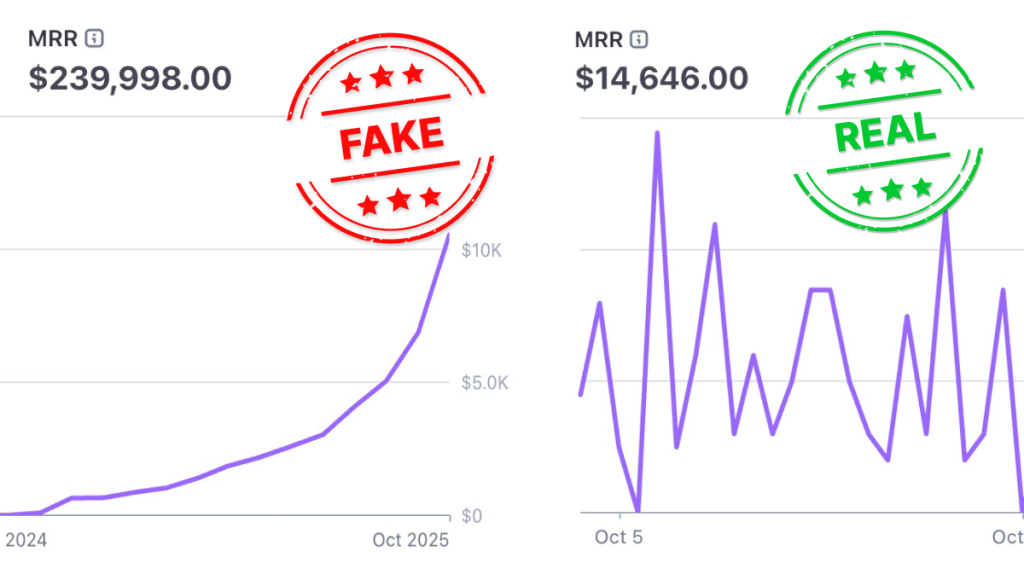
TrustMRR was born out of a specific frustration in the indie hacker community. In late 2025, Pieter Levels publicly called out the widespread practice of founders faking MRR screenshots to inflate perceived traction. Marc Lou, known for building ShipFast and CodeFast, responded by building TrustMRR in 48 hours: a platform where revenue data is pulled directly from payment processors, verified via API, and refreshed hourly. No manual entry, no screenshots, no way to fudge the numbers.
The result is a dual-purpose product. On one side, it functions as a global leaderboard of 800+ startups with real, verified revenue figures. On the other, it serves as an acquisition marketplace with over $1.2 billion in listed startups. Founders can list for free to build credibility and get a high-DA backlink. Buyers can browse the directory without paying anything. The paid tiers only kick in when you want your listing featured in the acquisition marketplace.
What Are TrustMRR’s Key Features?
Verified Revenue Data
The core differentiator is that revenue is not self-reported. TrustMRR connects directly to payment processors including Stripe, LemonSqueezy, Polar, DodoPayments, and RevenueCat. Once a founder authenticates their account, the platform pulls MRR data automatically and refreshes it every hour. This means the leaderboard reflects what founders are actually earning right now, not what they claimed six months ago in a tweet. For buyers evaluating acquisition targets, this changes the diligence dynamic significantly.
Global Leaderboard
The leaderboard currently tracks 800+ startups, sortable by revenue and category. It functions as a discovery tool for buyers and as a competitive reference point for founders. We found this genuinely interesting to browse: you can see which indie products are generating $5K, $50K, or $200K monthly recurring revenue, all backed by connected payment data. For founders, appearing on the leaderboard with verified numbers carries more weight than a tweet with a screenshot that anyone could Photoshop.
Acquisition Marketplace
The marketplace side of TrustMRR is where the paid tiers come in. Listings are tiered at $29 (Starter), $199 (Growth), and $2,499 (Scale), with transaction fees applied at the point of sale: 3% goes to TrustMRR plus escrow fees from Escrow.com, which range from 5.6% on small deals down to 3.7% on transactions above $10 million. Those fees are split 50/50 between buyer and seller. The $1.2B+ in listed startups suggests the marketplace has gained real traction in its first few months, though liquidity and completed deal volume are harder to independently verify at this stage.
Public Profiles and Backlinks
Every verified startup gets a public “Proof of Work” profile page on TrustMRR. These pages display the connected revenue data, the founder’s track record, and product details. TrustMRR’s domain authority sits above 40, which means a listing here is a meaningful backlink for any early-stage product trying to build search presence. For founders doing SEO, this is a free credibility signal with a real distribution benefit. It is a smart acquisition loop: founders list to get visibility, which populates the database, which attracts buyers, which validates the marketplace.
How Much Does TrustMRR Cost?
Browsing the directory and listing your startup are both free, which makes TrustMRR accessible for the majority of its user base. The paid tiers apply only to acquisition marketplace exposure: Starter at $29, Growth at $199, and Scale at $2,499 per listing. Transaction fees on completed deals are 3% to TrustMRR plus Escrow.com’s sliding fee structure (5.6% for small deals, 3.7% for deals above $10M), split equally between buyer and seller.
By comparison, Acquire.com charges sellers a success fee of around 4-6% with no free listing tier that provides equivalent visibility. TrustMRR’s model is more accessible at the low end, and the free listing with a verified revenue badge creates a lower barrier to entry for founders who just want the credibility without immediately selling. The Scale tier at $2,499 is positioned for high-value exits where the listing fee is a rounding error relative to the deal size. For mid-range acquisitions in the $50K to $500K range, the Growth tier at $199 is the realistic entry point.
| Plan | Price | Plan Features | Best For |
|---|---|---|---|
| Free | $0 | Browse all verified startups, list your own startup with verified revenue | Founders benchmarking and building credibility |
| Starter | $29 | Marketplace listing for selling your startup | Founders exploring a sale |
| Growth | $199 | Enhanced visibility, newsletter exposure, buyer matching | Serious sellers wanting more exposure |
| Scale | $2,499 | Maximum visibility, priority buyer matching, premium placement | High-value acquisitions |
Who Is TrustMRR Best For?
Use TrustMRR if you are an indie hacker or bootstrapped founder who wants to demonstrate real traction without relying on social media screenshots. The verified badge and public profile give you a shareable, credible source of truth that holds up to scrutiny. Use it if you are actively looking to sell a startup and want a marketplace that attracts buyers who already care about verified financials. Use it if you are a serious buyer evaluating acquisition targets and want to skip the step of asking sellers to prove their numbers manually.
Skip TrustMRR if your payment infrastructure runs on processors not yet supported by the platform. If you are using Paddle, Chargebee, or a custom billing setup, there is no native integration yet, and a manual listing without the verified badge loses most of what makes TrustMRR compelling. Skip it if you are raising venture capital rather than looking at bootstrapped exits: the platform is oriented toward indie-scale deals, not Series A fundraises. And skip it if you need a two-sided marketplace with high deal velocity and active broker support, as TrustMRR is still early enough that deal completion infrastructure is thinner than established players.
Best TrustMRR Alternatives
Acquire.com
Acquire.com is the established leader in the startup acquisition marketplace space, with a larger pool of vetted buyers and a dedicated deal team for higher-value transactions. It offers more structured diligence support and an escrow process with more hand-holding. The tradeoff is cost: success fees run higher than TrustMRR’s 3%, and there is no equivalent free-listing tier with verified revenue data. Acquire.com suits founders looking for a more managed sale process. TrustMRR suits those who want to move faster and with lower friction at the listing stage.
Baremetrics Open Startups
Baremetrics pioneered the concept of open revenue dashboards for startups, letting founders publish live Stripe metrics publicly. It is a legitimate credibility tool with a well-known brand in the SaaS space. However, Open Startups is a feature of Baremetrics, not a standalone product, which means you need to be a paying Baremetrics customer to use it. Plans start at $58 per month. TrustMRR offers the verified revenue badge for free, supports more payment processors, and adds the acquisition marketplace on top. For founders who are not already on Baremetrics, TrustMRR is the more accessible option.
Indie Hackers
Indie Hackers is a community platform where founders share revenue milestones, build in public, and discuss strategy. Revenue figures on Indie Hackers are self-reported, which means they carry the same credibility risk that TrustMRR was explicitly built to solve. The community and content distribution are unmatched: a good Indie Hackers post can generate thousands of visitors and significant product traction. But if the goal is verified revenue proof for buyers or for building long-term credibility, Indie Hackers is a supplement rather than a replacement for TrustMRR. The two work well together: list on TrustMRR for verification, post on Indie Hackers for reach.
Final Verdict: Is TrustMRR Worth It?
TrustMRR solves a real and specific problem with unusual directness. The fake MRR screenshot problem is not theoretical, and building an API-first verification layer that refreshes hourly is the right technical answer. For indie hackers with connected payment processors, the free tier alone delivers meaningful value: a verified badge, a public profile with a DA 40+ backlink, and leaderboard placement that serves as social proof without the credibility risk of self-reported numbers. We found the core product to be tightly scoped and well-executed for something built in 48 hours and launched with 669 Product Hunt upvotes.
The platform is early, and that shows in a few places. Processor support is limited to five integrations, the marketplace liquidity is still building, and the Scale tier at $2,499 is a big jump from Growth at $199 with limited intermediate options. But the fundamentals are strong: the verified data layer is a genuine moat, the dual-purpose model creates a self-reinforcing network effect, and the free entry point lowers the cost of trying it to zero. For founders who run on Stripe or LemonSqueezy and want a credible, shareable source of truth for their revenue, TrustMRR is worth setting up today.
TrustMRR Pros & Cons
What We Like
- API-verified revenue data eliminates fake MRR screenshots entirely
- Free to browse and list, with a DA 40+ backlink for verified profiles
- Combines leaderboard and acquisition marketplace in one platform
- 800+ verified startups with hourly data refresh
What Could Be Better
- Transaction fees (3% TrustMRR + Escrow.com fees) add up on larger deals
- Only supports 5 payment processors, excluding PayPal and manual invoicing
- Marketplace is still early stage with limited buyer pool compared to Acquire.com
TrustMRR FAQ
What is TrustMRR?
TrustMRR is a verified startup revenue database and acquisition marketplace. Founders connect their payment processor via read-only API keys, and TrustMRR publishes tamper-proof public revenue profiles updated hourly.
How much does TrustMRR cost?
Browsing and listing your startup is free. Marketplace listing tiers for sellers are $29 (Starter), $199 (Growth), and $2,499 (Scale). Transactions incur a 3% TrustMRR fee plus Escrow.com fees.
Is TrustMRR worth it?
For indie hackers who want credible revenue benchmarking and a free backlink, absolutely. For startup buyers, the verified financials reduce due diligence burden. The marketplace is still maturing but growing fast.
What are the best TrustMRR alternatives?
Acquire.com is the largest startup acquisition marketplace but uses gated financial verification. Baremetrics Open Startups offers transparent revenue dashboards for paying customers. Indie Hackers has self-reported revenue data.
Does TrustMRR offer a free plan?
Yes. You can browse all 800+ verified startups and list your own startup with verified revenue data for free. The free listing includes a public profile with a DA 40+ backlink.
Who is TrustMRR best for?
Indie hackers and bootstrapped founders who want to benchmark against verified peer revenue, build credibility with proof of revenue, or explore selling their startup with pre-verified financials.






